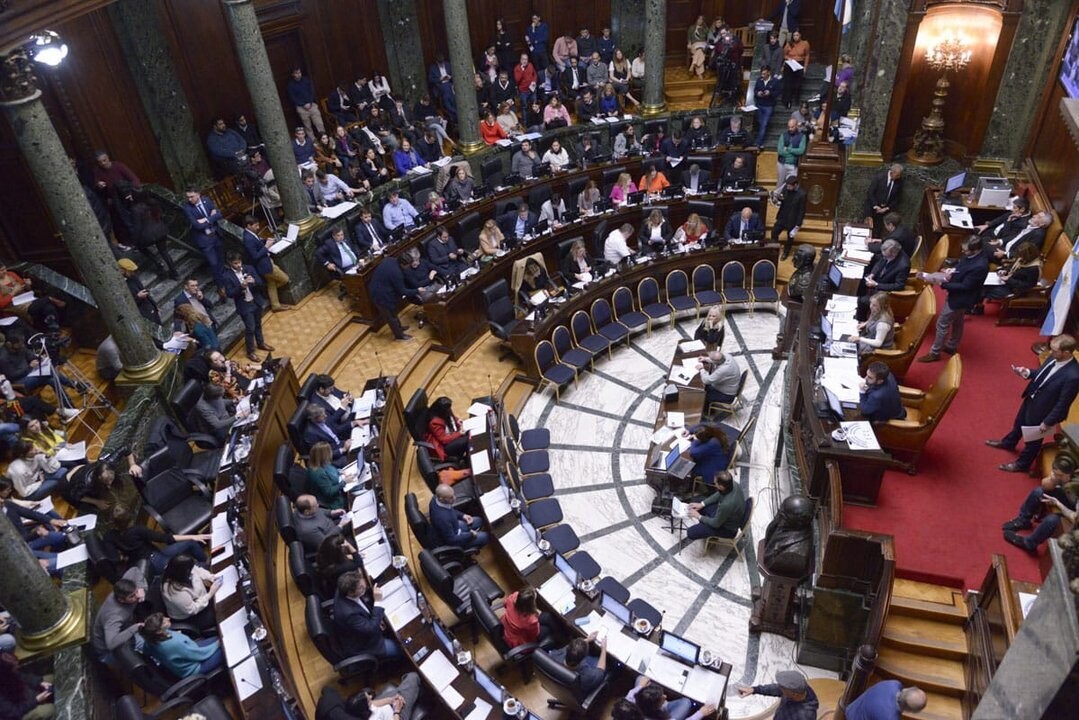
In October 2025, the key points on which the Buenos Aires minister focused were: strengthening the public system through infrastructure and technology; prioritizing mental health and child-adolescent neurodevelopment; and improving early detection programs in schools. He also stressed the importance of school vaccination, with a plan to reach '100% of schools' to vaccinate children directly in educational establishments. The plan presented by the Buenos Aires Ministry of Health outlines a strategy to reaffirm health care for all porteños and improve existing infrastructure. Additionally, the official stated that the network of 51 Health Centers (CESAC) and three Comprehensive Care Centers (CCI) is being consolidated with interdisciplinary family health teams. However, the Buenos Aires opposition criticized the 2026 Health Budget, deeming it insufficient and demanding more details on 'budgetary execution, territorial coverage, and human resources'; it also warned of 'possible adjustments and cuts', although the ruling party denied it. On one hand, the opposition blocs, especially Unión por la Patria (UxP) and the Workers' Left Front (FIT), indicated that there is already a shortfall and adjustment because the budget is 'fictitious' and 'hides' cuts with allocations that 'do not meet' the real needs of public health. In the same vein, they called for a 'deeper' debate, article by article, in the Legislature, and raised concerns about resource distribution across the territory and staffing planning to achieve greater equality in the neighborhoods of Buenos Aires. UxP bloc president, legislator Claudia Neira, pointed to the lack of salary updates, while her FIT counterpart, Andrea D'Atri, maintained that, contrary to appearances, the budget had decreased. 'It is fundamental to take extraordinary measures that focus on prevention and care, for which it is necessary, above all, to have complete and reliable information that allows for planning and implementing the best public policies to respond to this problem that affects more and more people. Then, the budget, in real terms, decreases,' D'Atri stated. Mental health and rare diseases. The projects for the Mental Health Epidemiological Study and centers for Rare Diseases (EPF) were pushed forward by the UxP bloc and have been incorporated: they were proposed to Quiros during budget rounds, so a portion of the Health budget will have to be allocated to finance them. The project linked to the Mental Health Epidemiological Study was led by legislator Victoria Freire and includes both the adult population and children and adolescents. 'The objective of the study is to obtain updated information on the mental ailments of the city's inhabitants, as well as the social, political, economic, and cultural determinants that influence them,' the document states. Health, the axis of the debate. Buenos Aires, December 21 (NA) – Legislators from the city of Buenos Aires questioned the 2026 Health Budget presented by Minister of Health Fernán Quirós, considering that the government of Jorge Macri contemplates the lack of salary updates for area professionals and that the amount allocated to the portfolio 'decreased despite seeming otherwise.' According to what the Argentine News Agency learned, the 2026 Budget bill for health was set at 17.3 trillion pesos (exactly $17,341,466,875,159), which represents 'a nominal increase of 17.7% compared to the previous year.' But Quirós defended budgetary sustainability and affirmed that the historical execution rate of his portfolio 'hovers between 97 and 100% annually,' by assuring that 'every peso invested translates into concrete services.' Buenos Aires Health Minister, Fernán Quirós. It is also stated that the care for mental ailments 'is an urgent problem' and that the COVID-19 crisis, in addition to the 'socioeconomic crisis our country is going through,' worsened the already precarious situation of millions of people, which has an impact on the population's mental health. 'Health falls by 2.7%, but by 10% if you compare it with the 2023 budget. The implementation of an extraordinary study is a first step to focus on mental health and move towards a state that protects and cares for its population,' the project concludes. The official text. The other initiative is to create reference centers for Rare Diseases (EPOF) in the city's public hospitals, 'especially in pediatric ones,' where 'early diagnosis is essential.' 'The purpose of this law is to promote comprehensive care actions and the protection of the rights of people with EPOF, with the aim of improving their quality of life and that of their families,' the text indicates. On the other hand, it was detailed that the Reference Center must be integrated 'by health professionals and specialized members of civil society,' as well as to set up a free telephone line and a 'specialized' web page within the City 'for guidance and advice' on EPOF.